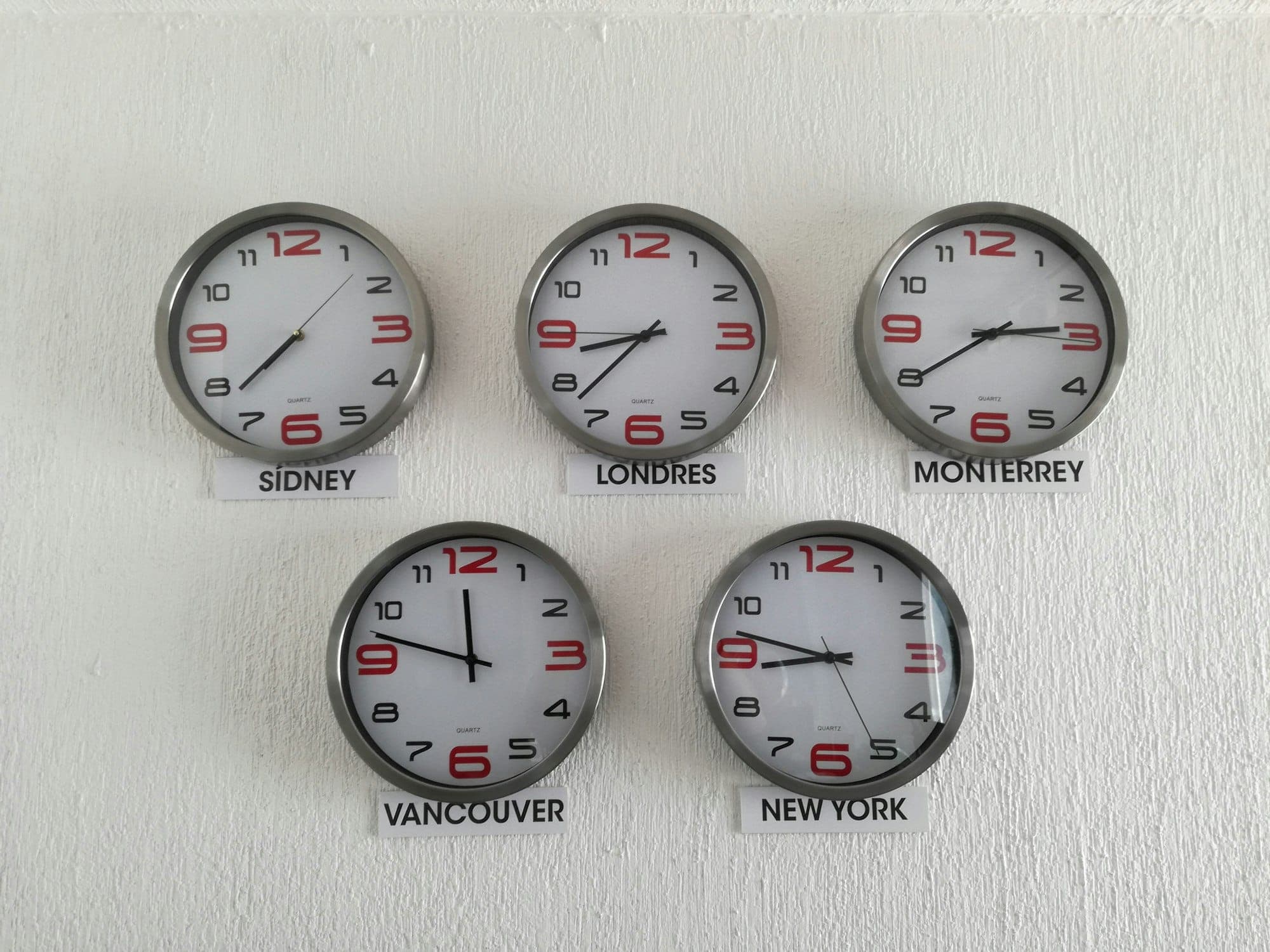
Nearshore for the UK: Why African Time Zones Work for British Businesses
Nearshore usually means Eastern Europe and offshore usually means Asia. For a UK business, much of Africa shares the working day more closely than either label suggests.
For remote work, nearshore is best measured in shared working hours, not distance or flight time.
All eight of Remoteli's African markets sit between GMT and GMT+3, so a local 9-to-5 day overlaps a London 9-to-5 by five to eight hours.
A local working day in Manila overlaps a London day by an hour at most, and one in India by two and a half to three and a half hours.
Overlap makes collaboration easier; it does not replace a clear brief, good handovers or planning for leave.
Ask a UK business where nearshore talent comes from and the answer is usually Eastern Europe. Ask about offshore and the answer is India or the Philippines. Africa rarely appears in either list, which is odd, because for a business run from London most of the continent's major talent markets share more of the working day than many European options do.
This piece looks at nearshore the way a remote team experiences it: in hours. It sets out how much of a London day each of Remoteli's eight African markets shares through the year, why language matters as much as the clock, and what overlap does not fix. If you are still weighing whether to hire in Africa at all, start with our guide to hiring talent in Africa.
Nearshore Is About Hours, Not Miles
The terms come from a world of physical outsourcing, where distance meant shipping times and travel costs. Nearshore meant a neighbouring country; offshore meant somewhere far away and usually cheaper. For a dedicated remote professional, distance barely matters. What matters is whether you can talk in real time, answer each other's questions the same day and hold a meeting without someone working at midnight.
Measured that way, nearshore is the set of locations whose normal working day overlaps yours for most of its length. Offshore is everywhere that does not, where shared hours are short or depend on someone working a night shift. By that test, several African markets are closer to London than parts of the European Union.
The Time-Zone Arithmetic
The table below uses the IANA Time Zone Database, the reference behind most computer clocks, to compare each market with London. The UK runs on GMT in winter and moves to British Summer Time (GMT+1) from the last Sunday of March to the last Sunday of October. Most of the African markets do not change their clocks, so their gap with London shifts by an hour twice a year.
The overlap columns show how many hours a 9:00 to 17:00 local day shares with a 9:00 to 17:00 day in London, before anyone adjusts their hours. India and the Philippines are included for comparison.
Local working-day overlap with London (IANA Time Zone Database)
Market
Local time
Overlap, UK winter
Overlap, UK summer
Ghana, Senegal, Côte d'Ivoire
GMT all year
8 hours
7 hours
Nigeria
GMT+1 all year
7 hours
8 hours
Rwanda, South Africa
GMT+2 all year
6 hours
7 hours
Egypt
GMT+2, GMT+3 in summer
6 hours
6 hours (7 for a few weeks in spring)
Kenya
GMT+3 all year
5 hours
6 hours
India
GMT+5:30 all year
2.5 hours
3.5 hours
Philippines
GMT+8 all year
None
1 hour
Local working-day overlap with London (IANA Time Zone Database)
Three things stand out. Ghana, Senegal and Côte d'Ivoire share London's clock exactly for five months of the year. Nigeria does the same in summer. And even Kenya, the furthest east of the eight, keeps at least five shared hours on a normal local day, with its morning sitting ahead of yours so work can be ready when you start.
Egypt is the exception that needs a note. It observes summer time from the last Friday of April to the last Thursday of October, which keeps it two hours ahead of London for most of the year. Its typical working week also runs Sunday to Thursday, as our guide to hiring talent in Egypt explains.
How This Compares with Eastern Europe
Eastern Europe earns its nearshore label honestly, but the clock does not favour it as much as people assume. Poland follows Central European Time, one hour ahead of London all year because both change their clocks on the same dates, which gives seven shared hours on a normal day. Romania follows Eastern European Time, two hours ahead all year, which gives six. Both figures come from the same IANA data.
Set against the table above, Ghana, Senegal, Côte d'Ivoire and Nigeria match or beat Warsaw for shared hours across the year, and Rwanda, South Africa and Egypt match or beat Bucharest. The differences between Eastern Europe and Africa are real, but they lie in language, roles, seniority and price rather than in the time zone. If your shortlist is built on the idea that only Europe keeps UK hours, it is worth reopening.
Language Is the Other Half of Nearshore
Shared hours only help if you share a working language. Here the African markets offer something unusual: a choice of three.
English: the official language of Ghana and Nigeria, an official language of Kenya alongside Kiswahili, one of Rwanda's official languages, and in South Africa "the most used language for conducting business", according to the U.S. International Trade Administration.
French: the official language of Senegal and Côte d'Ivoire, and an official language of Rwanda. See our guide to French-speaking talent in Africa.
For a UK business selling into France, Belgium, North Africa or the Gulf, that means one nearshore partner can cover English, French and Arabic work on broadly the same clock.
What Overlap Changes Day to Day
Overlap is not an abstract benefit. It shows up in the small frictions that decide whether a remote hire feels like part of the team.
Same-day answers. A question asked at 11:00 gets answered before lunch, not overnight.
Normal meetings. Stand-ups, one-to-ones and reviews happen inside both parties' working day.
Customer hours. A support or sales professional on a nearby clock is working when your UK customers are.
Faster onboarding. New starters learn faster when they can ask, watch and correct in real time.
Fewer handover gaps. Work does not sit waiting for the other side of the world to wake up.
None of this makes offshore wrong. A long time difference can be useful when you want work done while you sleep, or cover for a customer base in Asia-Pacific. Our comparison of Africa, the Philippines and India looks at those trade-offs directly.
What Nearshore Does Not Solve
A shared clock is a head start, not a management system. The same disciplines apply to a professional in Accra as to one in Manchester:
A clear role brief and measures of what good looks like in the first 90 days.
Written processes and access to the tools the role needs from day one.
Planned cover for leave. Remoteli professionals take 21 days' annual leave a year, and new standard subscriptions do not include automatic leave cover.
Awareness of local public holidays, which differ from UK bank holidays.
Regular feedback, especially in the first weeks.
Remoteli professionals are dedicated, full-time contractors working 180 hours a month. Remoteli manages recruitment, onboarding and ongoing operational support, and you direct the day-to-day work, just as you would with any team member. Our comparison of remote hiring models explains how this differs from agencies, freelancers and employer-of-record arrangements.
Which Market for UK Hours?
When you choose UK & Europe working hours and English in the Solution Builder, Remoteli's recommendation depends on the role and the experience level. Across Remoteli's 38 roles, the pattern is clear:
Junior: usually Ghana (20 roles) or Nigeria (17 roles), with administration, support and finance roles leaning to Ghana and software, data and creative roles to Nigeria.
Mid: more varied. Nigeria leads, with Ghana, Kenya, Egypt and South Africa recommended for particular roles.
Senior: South Africa for 37 of the 38 roles.
Every one of those markets sits within three hours of London. Our guides to Ghana and Kenya show how two ends of that range work in practice, and the Solution Builder will show the recommendation and price for your own role.
How to plan working hours and time-zone overlap when your remote team serves the UK and Europe, North America or Asia-Pacific, using the clocks of eight African talent markets.
A fair comparison of three remote talent regions for UK and European businesses: working-hour overlap, languages and how mature each market is, using sourced figures only.
A practical guide to hiring talent in Africa: why businesses do it, how eight talent markets compare on language and hours, which roles you can hire and how the process works.
Remoteli·11 min read
Find a market that keeps your hours
Choose UK & Europe working hours and your role to see which African market Remoteli recommends, and what it costs.