How to Prepare for a Remote Job Interview with an International Company
Remote interviews test your preparation, communication and set-up as much as your experience. Here is how to prepare for an interview with an international company.
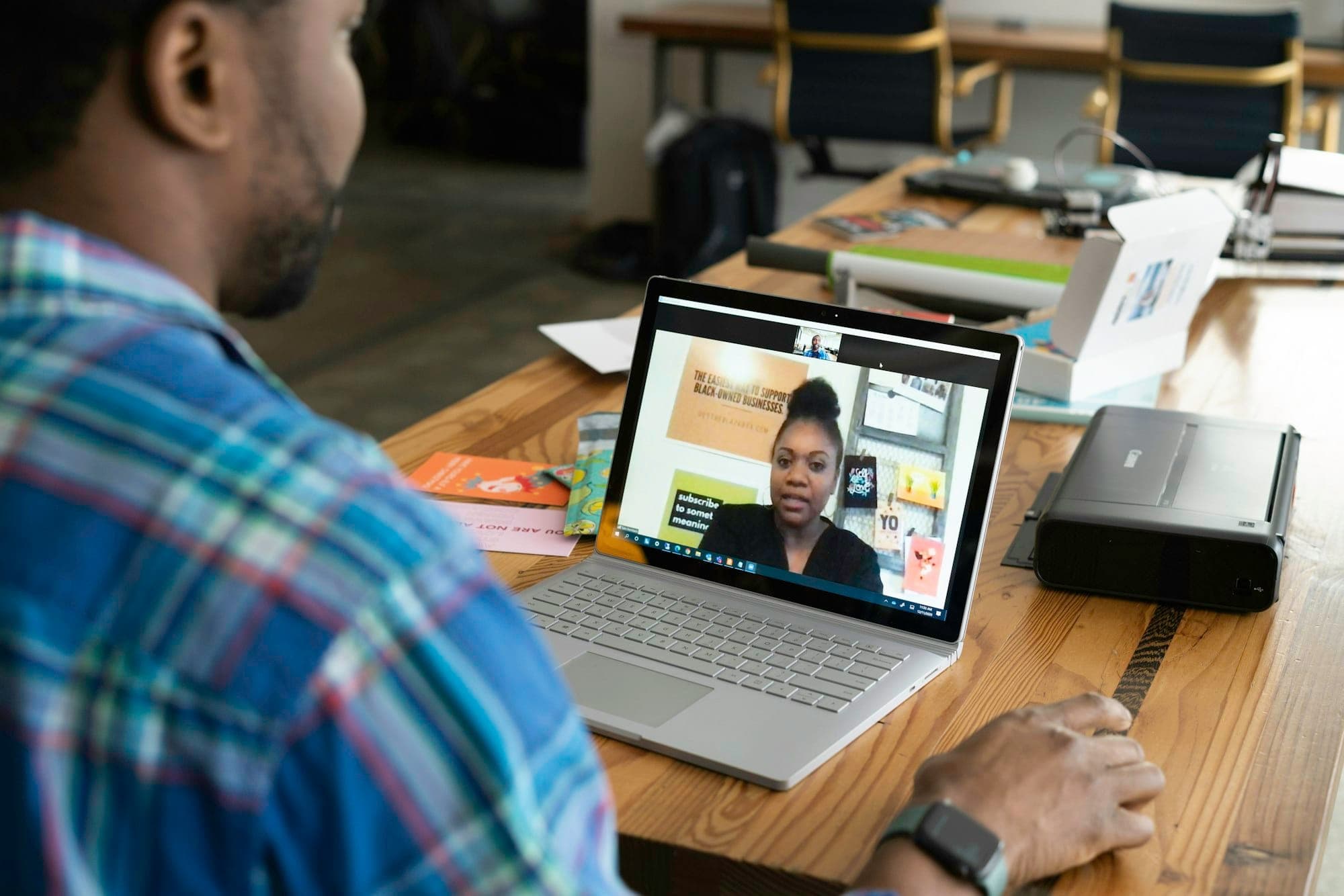
Test your connection, camera, microphone and the meeting link well before the interview.
Confirm the interview time in your own time zone in writing.
Prepare three or four specific examples of your work, with the situation, your action and the result.
Show how you work remotely: how you communicate, manage your time and handle problems.
A remote interview is a small sample of what working with you will feel like. The interviewer notices whether the call starts on time, whether your sound is clear and whether your answers are specific, as much as what you say about your experience. Preparation therefore covers your set-up, your research and the examples that prove you can do the job without close supervision.
Here is how to prepare at each stage, from the days before to the follow-up afterwards.
Get the Practical Details Right
Many strong candidates lose confidence in the first few minutes because something practical goes wrong. Most of it can be avoided.
The day before
Confirm the date and time in your own time zone, in writing
Open the meeting link and check the platform works on your device
Test your camera, microphone and internet connection
Charge your laptop and plan for a power or connection back-up
Choose a quiet space with good light on your face and a tidy background
Join a few minutes early. If something does fail on the day, stay calm, message the interviewer straight away and suggest a solution, such as rejoining by phone. Handling a problem well can leave a better impression than no problem at all.
Research the Company and the Role
Read the company's website, look at what it sells and to whom, and find out where its customers and team are based. That last point helps you understand the working hours and communication style you are likely to meet.
Then read the role description closely. Note the three or four responsibilities that matter most and think about where you have done similar work. If you cannot see a direct match, think about transferable experience and be ready to explain it honestly.
Prepare a short introduction too. You will almost always be asked to tell the interviewer about yourself, and a clear two-minute answer sets the tone for everything that follows. Cover your current or most recent role, the skills most relevant to this position and why this opportunity interests you. Practise it aloud a few times so it sounds natural rather than memorised.
Prepare Examples That Prove Your Experience
Interviewers remember specifics. “I am hard-working” is forgettable. “I took over a backlog of 200 support tickets and cleared it in two weeks by sorting them by urgency” is not.
A simple structure helps: describe the situation, what you did and what happened as a result. Prepare three or four examples that cover your core skills, a problem you solved, a time you worked with people in another location and a mistake you learned from.
Keep each answer to a minute or two. If the interviewer wants more detail, they will ask.
Show How You Work Remotely
International companies want to know how you will work when nobody is watching. Expect questions about how you organise your day, how you stay in touch with a team in another time zone and what you do when you are stuck.
Answer with real habits, not general claims. Describe how you plan your week, how you share progress, which tools you are comfortable using and how your working set-up keeps you reliable. If you have completed Remoteli's Work Ready assessment, you will already have thought carefully about your equipment, workspace, connectivity and availability; our article on what it means to be Work Ready explains more.
Communicate Clearly on Camera
Speak a little more slowly than you would in person and pause before answering complex questions. If you do not understand a question, ask the interviewer to repeat or rephrase it. That is a sign of care, not weakness, especially when people have different accents or first languages.
Look at the camera when you are making an important point, keep notes brief so you are not reading, and close other applications so notifications do not interrupt you.
Ask Good Questions
Near the end, you will usually be invited to ask questions. Prepare a few that show you are thinking about doing the job well:
What would a successful first month look like in this role?
Which hours does the team usually overlap, and how do you communicate?
Who would I work with most closely day to day?
What are the biggest challenges the team is facing right now?
Follow Up Professionally
Send a short thank-you message within a day. Mention something specific from the conversation and restate your interest in one sentence. Then be patient; international hiring can involve several people across different time zones.
Whatever the outcome, note what went well and what you would change. Every interview is practice for the next one. If you did not get the role, it is reasonable to ask politely for brief feedback. Not every company will give it, but when they do, it is often the most useful preparation you can get.
A practical guide for professionals across Africa who want to work with international companies: what businesses look for, how to prepare and how to build a career that lasts.
Being Work Ready shows businesses you have the equipment, workspace, connectivity and availability to start delivering from day one. Here is what it involves.
A strong profile shows what you can do, not just where you have been. Practical ways to make your professional profile clear, credible and ready for international opportunities.
Remoteli·5 min read
Join the Remoteli Talent Network
Create your professional profile and be considered for full-time roles with international businesses.