Remote teams rarely fail for lack of tools. They struggle when nobody has agreed how to use them. These communication habits keep distributed work clear and moving.
Agree what each channel is for and how quickly people should expect a reply.
Writing things down by default makes a remote team faster, not slower.
Protect shared working hours for conversations that genuinely need to happen live.
Regular, visible progress updates replace the reassurance an office provides by default.
Remote team communication works when it is deliberate. The teams that do it well agree which channel is for what, write important things down, save live conversation for the hours they share and make progress visible without being asked.
None of this requires new software. It requires a handful of everyday habits that everyone understands and follows. This guide is about those habits: the daily mechanics of messages, documents, meetings and updates. For team structure, hiring and management, see our guide to building a high-performing remote team.
Agree What Each Channel Is For
Most remote teams have more channels than they need and no shared rules for any of them. The result is familiar: urgent requests buried in email, decisions lost in chat threads and people checking five places to find one answer.
A simple agreement solves most of it. Yours might look something like this:
An example channel agreement
Channel
Use it for
Expected response
Team chat
Quick questions, day-to-day coordination
Within a few working hours
Project tool
Tasks, owners, deadlines and status
Checked daily
Email
External contacts and formal records
Within one working day
Video call
Discussion, feedback and anything sensitive
Scheduled in shared hours
Phone or direct message
Genuine emergencies only
As soon as possible
An example channel agreement
The details matter less than the fact that everyone agrees them. Write the agreement down and include it in every new starter's first week. Our 30-day onboarding plan for remote professionals shows where it fits.
Write It Down by Default
In an office, context spreads by accident. In a remote team, it only spreads if someone writes it down. Decisions, project briefs, processes and meeting outcomes should all live somewhere searchable.
This feels slower at first. It is not. Written context means fewer repeated questions, faster onboarding and less dependence on whoever happens to be online. It also helps colleagues who work in a second language, who can read at their own pace instead of keeping up with fast conversation.
A useful test: if someone joined the team tomorrow, could they find out why a recent decision was made without asking anyone?
Use Overlap Hours Well
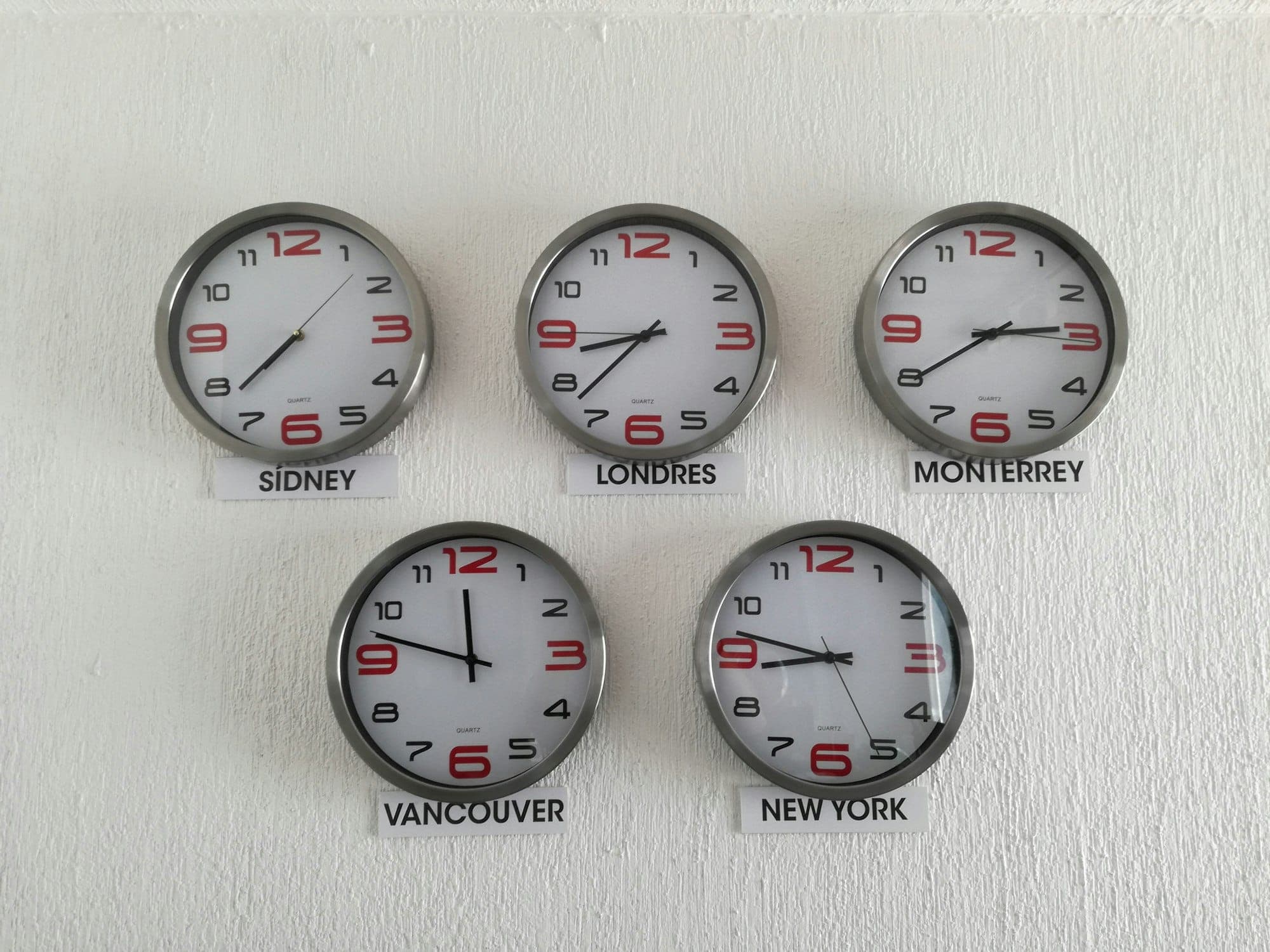
When a team spans time zones, the hours everyone shares become valuable. Spend them on conversations that genuinely need to be live, such as problem solving, feedback and planning, and move status updates to writing.
How much overlap you have depends on where people are based and which hours they agree to work. A UK business working with professionals in West Africa may share almost the whole day; a team split between Europe and North America may share only a morning. Our guide to working hours and time zones sets out the offsets for each of Remoteli's talent markets and how to plan coverage around them.
Run Fewer, Better Meetings
Meetings are expensive in any team and more so across time zones. Before scheduling one, ask whether a written update with a deadline for comments would do the same job.
When a meeting is the right choice, a few habits keep it useful:
Share an agenda in advance, with the decision you need to make.
Keep the invite list to the people who contribute or decide.
Write up outcomes and owners straight afterwards, in the agreed place.
Rotate times occasionally if the same people always join early or late.
Make Progress Visible
Managers of remote teams often worry about what they cannot see. The better answer is visibility that people create themselves, rather than monitoring software.
A short end-of-day or end-of-week update works well: what was done, what is next and anything blocking progress. Keep it to a few lines. Over time these updates build trust in both directions, because managers stop needing to ask and professionals get credit for work that would otherwise go unnoticed.
Respect Focus Time and Working Hours
Constant availability looks like commitment but usually produces shallow work. Agree that people can block time for focused tasks and that a slower reply during those blocks is normal, not a warning sign.
Working hours deserve the same respect. If a colleague's day has ended, a message can wait until tomorrow unless it is a genuine emergency. Scheduling messages to arrive during the recipient's working hours is a small courtesy that keeps evenings free and expectations clear. Over time, these boundaries make a team more reliable, because people are rested and present when it counts.
Leaders set the tone here. If managers send late-night requests and expect quick answers, the written channel agreement will not survive long.
Give Feedback Early and Specifically
Without corridor conversations, small issues can sit unspoken for weeks. Make feedback a normal part of the rhythm rather than a special event. Regular one-to-ones help, and so does acknowledging good work in the open channel where the team can see it.
Be specific and kind. Written feedback lacks tone of voice, so a sentence that sounds neutral to you can land as criticism. When in doubt, have the conversation on a call and confirm the outcome in writing.
These habits apply to everyone on the team, including dedicated professionals you engage through Remoteli: you manage their day-to-day work and priorities, so include them in the same channels, updates and feedback routines as everyone else. Good communication is one of several foundations of a strong distributed team; our guide to building a high-performing remote team covers the others.
High-performing remote teams are designed, not discovered. How to structure roles, hire for remote habits, manage by outcomes and grow a distributed team one hire at a time.
A clear first month turns a promising hire into a productive team member. A week-by-week plan for onboarding a remote professional, with who owns each part and how to tell it is working.
How to plan working hours and time-zone overlap when your remote team serves the UK and Europe, North America or Asia-Pacific, using the clocks of eight African talent markets.
Remoteli·6 min read
Build a team that works
Our guide covers structure, communication and accountability for distributed teams.